
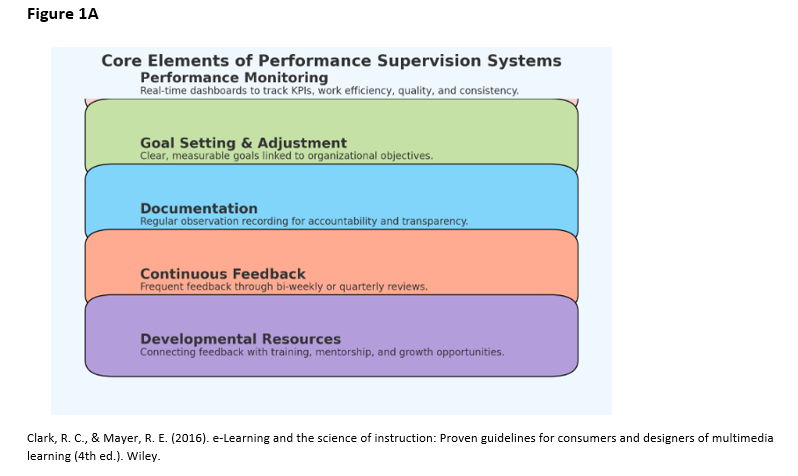
Performance supervision and feedback systems are coupled as crucial tools that can help human resource managers apply, assess and enhance productivity in relation to what optical organisations propose. Aginis (2019) highlights that a well-developed performance management system assists organizations in Identification of organizational goals and objectives as well as identifying accomplishments against the set objectives where the supervisor is able to keep track of achievement made and make necessary corrections or endorse achievements being made. Hence through the consistent, systematic, and structured approach of collecting, processing and storing the performance data, supervisors are therefore in a good position to determine where or what needs fixing, what has to be reinforced and whether there are any slow producers around. According to Dessler (2020), Organisational supervisory system centres on the need to enhance positive transparency and accountability with the emphasis of creating a climate that rightly supports the deeds of growth and development of the employees. Moreover, Kaplan, and Norton (1996), point out that accessing and monitoring organizational performance in view of strategic outcomes aids in the improvement of strategic consistency as well as in implementation of strategy in a linear process of translating it into achievable targets.