
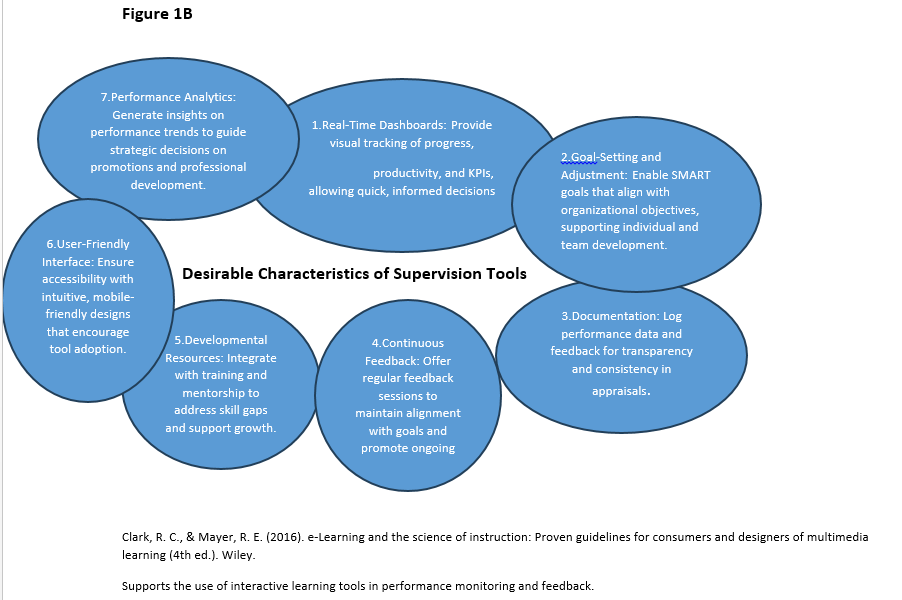
Supervision instruments or strategies are crucial for the HR managers and supervisors, to correctly track, facilitate as well as enhance workforce productivity towards organizational objectives (Pulakos, 2009; Dessler, 2020). Actual performance metrics refer to instant real time displays of how various tasks are being accomplished and the level of productivity achieved, with timely decision-making being fostered (Kaplan & Norton, 1996). It is essential, the goal-setting activities enable the specific and adjustable SMART goals to be set, which would make it easier for employees to comprehend their role in achieving organizational goals and objectives (Locke & Latham, 2002). Writings produce an open record of both accomplishment and feedback while making the evaluation process more accountable with ratings (Pulakos, 2009). Such feedback processes facilitate timely feedback hence supporting growth mindset culture throughout (Dessler, 2020). Interactive with developmental resources strengthen the skills and matches organizational strategic interventions (Aguinis, 2019). Measures performance provide us with performance trends that help us make strategic determinations on reward and development (Kaplan & Norton 1996). Last but not least, a good-looking interface increases the likelihood of tool usage by providing workers with friendly channels to access their feedback and performance results (Aguinis, 2019).